Health Care Reform and the Health Insurance Tax Credit by Mark Helland
Health Care Reform and the Health Insurance Tax Credit
by Mark Helland
Mark Helland, CPA is a partner with the public accounting firm of Elliott, Dozier and Helland, PC which is located in Tulsa, Oklahoma. Mark specializes in audit and tax related issues for church and ministry clients across the United States. For further assistance from Mark on this topic or for assistance on any other tax, accounting or church audit and compliance need, Mark can be contacted via email at [email protected] or by phone at (888) 893-1259 or (918) 488-0880.

 After months of partisan debate, the “Patient Protection and Affordable Care Act” became law nearly two years ago, on March 24, 2010. This act is widely considered to be the most significant piece of medical insurance reform legislation in the past thirty years. Known generally as “health care reform” or “Obama Care” it is also highly complex and controversial, with major implications for the U.S. economy.
There is a lot of misinformation in the public domain as to what exactly is contained within the health reform act, so it is important to understand that the act does not directly provide for a government takeover of health care as seen in Canada or Great Britain. The intent of the act was to expand health insurance coverage to more Americans with the goal being that 95% of Americans will be covered. What makes the act so controversial are the logistics of how this will be accomplished. The provisions of the act will be phased in over nearly ten years so certain components are years away from going into effect while other components are already in effect. Since the provisions of the act go into effect in stages, I believe the easiest way to understand the major provisions of the act is to break them down chronologically. Following are some of the major provisions which will affect churches and ministries in the coming years:
Provisions which took effect in 2010:
More than a dozen features of the act have already taken effect, including:
1. Tax credits are available for small businesses that provide health insurance to employees. Even tax-exempt employers, such as churches or ministries can potentially qualify for these credits as well. A tax-exempt employer claims the refundable credit by filing a Form 990-T with an attached Form 8941 showing the calculation of the claimed credit. The amount of the credit cannot exceed the total amount of income and/or Medicare taxes the employer is required to withhold from employee wages for the year and the employer’s share of Medicare tax on employee wages for the year. This could be a tremendous benefit to churches that qualify.
2. Dependent children are now allowed to remain on their parents’ health insurance plans until age twenty-seven.
3. There is now a ban on health insurers setting lifetime maximum benefit limits on medical coverage.
4. Health insurers can no longer set pre-existing conditions limitations for children. However, insurers can still deny coverage altogether for individual coverage for children until 2014.
5. “High-risk insured pools” are to be established which would be open to applicants with medical problems already rejected by insurers.
Provisions taking effect in 2012 through 2013:
1. Effective for the 2012 tax year, employers are required to report the value of health insurance coverage provided to employees on each employee’s annual Form W-2. This reporting is for informational purposes only and does not affect tax liability, as the value of employer provided health insurance coverage continues to be excludible from an employee’s income. The ultimate intent of the W-2 reporting will be to track coverage values for the 40% excise tax on high cost/”Cadillac” medical plans which will begin in 2018. The medical coverage costs subject to this reporting include; medical plans, prescription drug plans, dental and vision plans and employee assistance plans, among others.
2. Tax laws will change in 2013 to help pay for the cost of the health reform act. Taxpayers will see the 7.5% of adjusted gross income floor on itemized deductions for medical expenses rise to 10% and “high-income households” will see their Medicare taxes increase. Individuals who earn more than $200,000 in wages and joint filers who earn more than $250,000 will pay an additional .9% in Medicare taxes. Additionally, a new 3.8% Medicare tax will apply to the unearned or investment income of “high income households”.
Provisions taking effect in 2014:
The year 2014 is the key implementation year for the most significant of the health insurance requirements in the act. The U.S. government will require most Americans to have health insurance in force by 2014. While the constitutionality of this portion on the act is being challenged by multiple states in the court system, at this point in time this is the law of the land. The provisions pertaining to employers are very complex and will require the help of a good health insurance agent to navigate all of the intricacies. As a broad overview, the key components of the health insurance requirement are as follows;
1. Health Insurance Exchanges – By no later than 2014, individual states must establish insurance exchanges through which small businesses/organizations will be able to pool together to buy insurance. If individual states do not comply, a federally operated exchange will be set up. Under the act, the term “small businesses/organizations” means those having no more than one hundred employees. However, beginning in 2017 even large employers may enter the exchanges. Policies offered through the exchanges would be required to cover a range of basic benefits and insurance companies participating in the exchanges may not deny coverage to anyone with a pre-existing condition. The purpose of the exchanges is to serve as a health insurance resource for individuals who are in transition between employment and self-employment or for small businesses who would otherwise lack a large enough base of employees to qualify for more favorable group health insurance rates.
2. Employer Mandate – Certain employers will be required to offer health insurance to employees or be subject to a penalty. Employers with more than fifty employees must provide them with qualified health coverage or pay a $2,000 penalty per employee. Those employers with less than fifty employees are not required to provide coverage, but it is important to note that the employees of such organizations would then be required to buy individual policies or be subject to individual penalty.
3. Penalties for Uninsured Americans – Under the act, individual Americans who are not covered by an employer plan and who fail to purchase health insurance are subject to an annual penalty of at least $95 or up to 1% of income, whichever is greater, with a cap of $695 per year.
Finally, in 2018 a 40% excise tax will apply to employers who offer high cost/“Cadillac” plans. The definition of such plans would be those health insurance policies with an annual cost of greater than the threshold amount of $10,200 for an individual plan and $27,500 for family coverage. The logic here is that employees who are provided with such all inclusive coverage tend to use health care services at a much greater rate than others with less generous policies.
Health Insurance Tax Credit:
For churches and ministries, I believe that the most intriguing (and unbelievable) aspect of the health care reform act/”Obama Care” is the tax credit for health insurance. Because churches and ministries are tax-exempt, it would seem that a tax credit would not be possible because there is no income tax paid to be offset by a credit. In other words, most credits are considered to be “non-refundable” credits as they must offset income taxes paid to be of any benefit. However, the health insurance tax credit is considered to be a “refundable” credit which does not have to offset income taxes paid, and even tax-exempt employers such as churches or ministries can potentially qualify for this credit. Amazingly, the health care reform act has provided for non-profit organizations to qualify for the health insurance credit as long as the organization has paid certain levels of employer matching contributions of Medicare tax. Following is a very condensed summary of the basic qualifications to qualify for the health insurance tax credit:
- Your church or ministry organization must offer health insurance benefits to employees and must meet certain discrimination tests to ensure that health insurance coverage is not being “selectively” offered.
- The organization must pay at least 50% of the cost of this coverage.
- Next, there are two complicated calculations to determine the number of full-time equivalent employees (FTE’s) that your organization employs and the “average annual wages” of these employees.
Clearly, large churches and ministries will not qualify for this credit, but smaller churches and ministries need to consider whether or not they may be able to qualify. From our firm’s early assessment of the health care insurance credit, we believe that this credit could be a tremendous benefit to churches that qualify. For example, we recently worked with a mid-sized church that was able to qualify for a $22,000 tax credit for the year ended December 31, 2010. I would provide a strong word of caution though that this is not a DIY (“do it yourself”) project. The rules for this credit are complex and professional advice is an absolute necessity to correctly determine both eligibility for the credit and to accurately calculate the amount of the credit to which your organization may be entitled.
Mark Helland, CPA is a partner with the public accounting firm of Elliott, Dozier and Helland, PC which is located in Tulsa, Oklahoma. Mark specializes in audit and tax related issues for church and ministry clients across the United States. For further assistance from Mark on this topic or for assistance on any other tax, accounting or church audit and compliance need, Mark can be contacted via email at [email protected] or by phone at (888) 893-1259 or (918) 488-0880.
This article is designed to provide accurate and authoritative information in regard to the subject matter covered. It is shared with the understanding that neither the author nor Tony Cooke Ministries is engaged in rendering legal, accounting, psychological, medical or other professional services. Laws and regulations are continually changing, and can vary according to location and time. No representation is made that the information herein is applicable for all locations and times. If legal advice or other expert assistance is required, the services of a competent professional person should be sought.
© Tony Cooke Ministries, Inc. All Rights Reserved
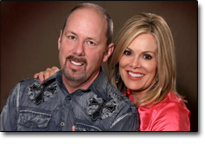 Doug wandered into a Church in the small town of Marysville in 1979 and that night would forever change his life. That night he met Jesus and the life of a drug dealer that had no real direction took on a whole new direction. Shortly after that Doug was called into the ministry and he began to share Jesus with all his friends and former associates, street witnessing and becoming the youth pastor at the Church where he’d been saved.
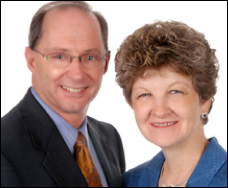 Marvin and his wife, Leah, are the founding pastors of
  My Dad is 85 years old and still gets early up every morning between five and six o’clock to help milk cows. He has done that as long as I can remember. As kids growing up, we helped Dad with the chores every morning and evening.
 "Lord, keep me straight. Don’t let me get off!" I prayed that simple prayer again this week as I have many times over the years. Whenever I hear another story about a preacher who gets off the path and falls into some kind of mess, I pray for him and all those who have been damaged by his dereliction. Then I pray for myself.
 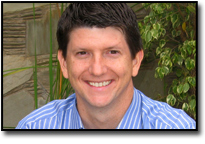 Walker and Haley Schurz have lived and ministered in Southern Africa since 1994. After graduating from Oral Roberts University they attended Rhema Bible Training Center and graduated in 1991.
 As we walk through our Christian life, hopefully we will see more and more of God and who He is. Moses desired to see God and now we can see God’s fullness in the light of His son Jesus. We may miss out on experiencing a part of God’s nature if an aspect of Him remains clouded to us through ignorance. Unfortunately, some Christians do not realize that God is the one who heals us, provides for us and leads us by His Spirit. It is a wonderful day when the eyes of our understanding become a bit more enlightened so that we know Him better.
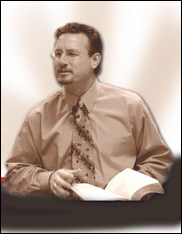 Guy Duininck earned a Bachelor’s Degree in Theology from Bethel College and attended Rhema Bible Training Center. Since 1981, Guy has traveled throughout the world teaching in local churches, Bible Schools and Ministers’ Conferences. With a strong emphasis on developing skilled spiritual leaders, strong local churches, and mature believers, Guy has significantly aided the Body of Christ in the places he travels. Guy has written five books, recorded six albums of his own music, and produced a number of audio teachings. The following article is an excerpt from Guy’s book, Grace for Effectual Ministry. You can obtain this book and learn more about Guy’s ministry by visiting his web-site at
 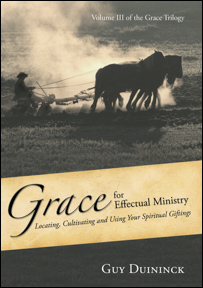 The specific task God assigns each believer determines the specific variety of ministry grace He endows them with. This truth is beautifully expressed by the Amplified Bible’s rendering of Paul’ words,
 Solomon was about to assume the throne of his father David, and he knew he needed help. So when the Lord appeared to Solomon one night and asked him what he desired most, the young man asked for only one thing: divine wisdom to help him lead the nation of Israel. Pleased with Solomon’s answer, God granted his request. In fact, Solomon went on to become the wisest man who ever lived!
 One of my favorite comedy movies was Mr. Magoo. Mr. Quincy Magoo is an eccentric millionaire with very bad eyesight who refuses to use eyeglasses and therefore always gets into trouble. During a museum robbery he accidentally gets a priceless gem called the Star of Kuristan, and begins to trace the way for the arch-criminals whose idea was to steal the gem, while two federal agents lead the manhunt for Mr. Magoo himself.1
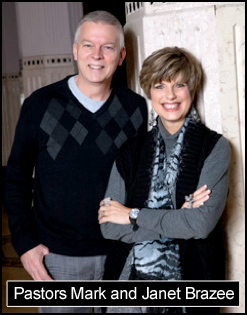 For more than 30 years, Pastors Mark and Janet Brazee have traveled throughout the world sharing the Word of God and the Spirit of God. Together they’ve shared the powerful truths of faith and healing in more than 50 nations.
 Missions is the heart of God for God so loved the world—the entire world. As a minister and as a believer, we have one great commission—go into all the world and preach the Gospel to every creature. Building a ministry is fine, but that is not our calling. Building large churches, beautiful buildings, retirement centers and television ministries are all good things to do. But all this falls down the priority list after first of all going into all the world to preach the Gospel to every creature. Whether we are called as a frontier evangelist or a local family church pastor, our calling is first of all to missions.
  As a kid, I wanted to be a lot of things. For a while I wanted to be a cowboy. Then, I wanted to be an FBI agent until I found out the requirements for being an agent, and I didn’t want to do that anymore. I wanted to be a baseball player, and then I wanted to be a mechanic and work on cars. My ideas of what I wanted to do kept changing as I grew up because of what I heard about these things. Hearing about something is exciting. It creates a desire within you to do or be what you’re hearing about.
  Ephesians 2:8 For by grace are ye saved through faith; and that not of yourselves: it is the gift of God:
 Joe Cala is the author of, “Living Your Life Today – The Fool Proof Way!” and “The Proven Formula of Success!” traveling minister, seminar leader, creator of “The Next Step Visitor Follow-Up System”, contributor of Personal Excellence Magazine and the founder of Joe Cala Ministries. Visit www.calaministries.org and contact Joe at 848-248-0730 or by email at
  So what in the world does Anti-Lock Braking Systems (ABS) have to do with Visitor Follow-Up Systems (VFS)?
  Kenneth W. Hagin, President of Kenneth Hagin Ministries and pastor of RHEMA Bible Church ministers around the world. Rev. Hagin began preparing for his call to ministry—a ministry that now spans 50 years—at Southwestern Assemblies of God University. He graduated from Oral Roberts University in Tulsa, Oklahoma, and holds an honorary Doctor of Divinity degree from Faith Theological Seminary in Tampa, Florida.
 Known for his entrepreneurial and intuitive management style which has created value and profitability for clients and company’s alike, John LaBruzzo brings thirty plus years of leadership experience to hospitality rooms and food and beverage operations, new project development and staff training and development in his consulting practice. With a functional speciality in food and beverage concepting and development; John has opened nine notable hotels from the ground up during his career as either General Manager or Development Team member. Among them, the Waverly in Atlanta, the Ritz Carlton in Washington, DC, The Peabody in Orlando and the Walt Disney World Swan and Dolphin Hotels in Orlando, Florida..
 Back in the day when Frank Borman was the President and CEO of Eastern Airlines there were abundant stories of his rampages with senior and junior managers on the never-ending quest to pursue excellence and to build the traveling public’s confidence in the then floundering airline.
  For most church and ministry organizations, maintaining strong internal controls over the finance and accounting function is a difficult task. Clearly, a church or ministry’s main focus is the preaching and teaching of God’s Word and the finance and accounting function, while important, is often a secondary consideration. Additionally, in today’s modern world the virtues of convenience and speed of response are highly emphasized, often to the detriment of policies and procedures. While efficiency, convenience and responsiveness are admirable, ignoring or circumventing organizational internal controls can result in some very negative outcomes. As I have discussed in previous articles on internal controls, the current weak state of the U.S. economy has caused financial fraud to be rampant and churches and ministries are certainly not exempt from fraud schemes. Church and ministry organizations must continue to take proactive steps to protect themselves and establish strong internal control structures.
 Our church needs an audit! That is the phone call that I have received so many times from pastors and churches across the country during my career. In most instances, this call is the result of one of the following events or “triggers”:
 Mark Helland, CPA is a partner with the accounting firm of Elliott, Dozier and Helland, PC which is located in Tulsa, Oklahoma. For further information on this topic, Mark’s firm has a short report on basic fraud prevention tactics which is available to you at no cost. Mark can be contacted via email at
  Christopher Alam was born a Muslim and received Jesus Christ in 1975. After enduring much persecution including spending almost an entire year in prison for preaching the Gospel, Christopher was threatened with execution. After this he escaped and went to Sweden as a refugee where he was granted political asylum. There, in church, he met Swedish-born Britta. You can read Christopher’s story in his exciting book, “Out of Islam.”


 God has decreed in His Word, “Now the just shall live by faith…” (Hebrews 10:38).
 I came to Christ in a time when having faith in God and receiving the baptism with the Holy Spirit were very common. Many people talked about believing God, having their prayers answered, experiencing the power of God, and seeing God do mighty things in the world. Furthermore, we were busy talking to others about these things. If they even gave us five minutes we would talk to them about faith in God, receiving the baptism of the Holy Spirit, or having the power of God in their life.
  Toward the middle of October, 2009 I was sensing a call to minister in nursing homes. Several years ago, my wife and I had ministered in nursing homes. We had four nursing homes and went to each one once a month on Sunday afternoons. This time the call was different. It seemed like I was to do it full-time.
 This know also, that in the last days perilous times shall come.