
Pure Religion by Tony Cooke
Pure Religion
Tony Cooke
 According to today’s politically correct and tolerant society, the last thing in the world a Christian should ever do is to state or imply that one person’s religion is better than another’s. We are supposed to embrace the idea that all religious expressions are equal and that all roads ultimately lead to the same destination. Fortunately, it appears that the Apostle James missed being “enlightened” by these perspectives, and he delineated sharply between religion that is “useless” and religion that is “pure and undefiled.” He said:
James 1:26-27 (NKJV)
26 If anyone among you thinks he is religious, and does not bridle his tongue but deceives his own heart, this one’s religion is useless. 27 Pure and undefiled religion before God and the Father is this: to visit orphans and widows in their trouble, and to keep oneself unspotted from the world.
It’s interesting to realize that the words “religious” and “religion” are only used a grand total of seven times in the entire Bible (King James and New King James versions), and three of these usages are in the two verses above.
Have you noticed how quick people are to avoid having the term “religious” applied to them?
- In the late 70’s, there was a popular song, “I’m Not Religious; I Just Love the Lord.”
- It’s not uncommon today for someone to say, “I’m not religious, but I am spiritual.”
- Many preachers (myself included) have said something to this effect: “Jesus came to bring us into relationship with God; not to establish a religion.”
There are pros and cons to this approach. I have a sense of caution when some say, “I’m not religious, but I am spiritual.” Certainly, some who decline being labeled ‘religious’ have a profound love for God and dedication to His people. They may simply be distancing themselves from certain dead, ritualistic practices or legalistic beliefs that they found to produce bondage and to be unscriptural. But I wonder if others who deny being religious are simply refusing to be submitted to any proper biblical authority, choosing instead to do everything on their own terms while embracing a hodge podge of beliefs based merely on personal preferences.
So let’s look at what the Bible (James 1:26-27 in particular) says about religion. It stands to reason that if there is a religion that is useless, we might assume there is also a religion that is useful. If there is a religion that is pure and undefiled, there might also be a religion that is impure and defiled. Our goal, then, should be to identify the traits of a religion that are useful, pure, and undefiled.
Useful, Pure, and Undefiled Religion is Identified by These Four Traits:
- SPEECH – Exercising Self-Control – In 1:26, James speaks of useful religion as that which results in a controlled tongue, and he proceeds to say in 3:2 that “…those who control their tongue can also control themselves in every other way” (NLT). In other words, it appears that being able to control our words is a major key to being able to establish self-control over all of our lives. As you study Scripture, there is an extensive list of “sins of the tongue” (e.g., gossip, slander, backbiting, complaining, cursing, blaspheming, lying, boasting, flattery, etc.). Controlling the tongue, though, is not just an issue of avoiding its negative usages, but it is also a matter of speaking the right words (blessing, encouraging, edifying, etc.). This is what makes the tongue the “small rudder” (James 3:4) that guides the direction of the our lives.
- SELF-AWARENESS – Avoiding Self-Deception – As soon as James addresses the failure to control one’s tongue, he refers to the person who “deceives his own heart” (James 1:26). In 1:22, he says, “But be doers of the word, and not hearers only deceiving yourselves.” Deception is distorted perception. Therefore, self-deception is a distorted perception of oneself. The Pharisee who prayed, “God, I thank You that I am not like other men…” (see Luke 18:11-14) thought he was better than others and was right with God because of His religiosity and good works, but God said he was not justified because he exalted himself. The Laodiceans were self-deceived as well. They said that they were rich, wealthy, and had need of nothing, but Jesus said they were wretched, miserable, poor, blind, and naked (Revelation 3:17). We need to do what Paul instructed the Corinthians to do: “Examine yourselves as to whether you are in the faith. Test yourselves” (2 Corinthians 12:5). How do we test ourselves? James indicates that it’s not just hearing the word, but it’s meditation upon and doing the word – applying the word in our lives – that keeps us free from deception and enables us to be blessed (1:22-25).
- SERVICE – Caring for the Hurting – In 1:27, James identifies “…to visit orphans and widows in their trouble” as a trait of pure and undefiled religion. Sometimes we think of orphans as a child who has lost both parents, and while this is a correct understanding, the Hebrew culture was even broader in its definition. The Hebrews also considered a child an orphan who had lost only its father. One commentary notes that, “Orphans and widows are often grouped together because they constitute the two social classes most open to exploitation and therefore most needing help and concern.” Anything that is important to God should be important to us, and Psalm 68:5-6 says, “A father of the fatherless, a defender of widows, is God in His holy habitation. God sets the solitary in families…” James did not advocate a “religion” that was theological, spiritual, or devotional only. He believed that pure religion sought to help the hurting. When James and other leaders in the Jerusalem church recognized the grace and assignment that God had given Paul and Barnabas, they not only offered them the right hand of fellowship, but “They desired only that we should remember the poor, the very thing which I also was eager to do” (Galatians 2:10).
- SEPARATION – Keeping Oneself Unspotted from the World – The fourth trait that James identifies as a correct religious expression has to do with personal purity. James was neither apologetic or unclear about the corruption and contamination of the world, as opposed to the purity and holiness that God desires for those that are His. In 1:21 (NLT), James said, “So get rid of all the filth and evil in your lives, and humbly accept the message God has planted in your hearts, for it is strong enough to save your souls.” In 4:4 (NKJV), James rebuked those who had been compromising with the world: “Adulterers and adulteresses! Do you not know that friendship with the world is enmity with God? Whoever therefore wants to be a friend of the world makes himself an enemy of God.” Paul advocated this same type of separation and cleansing when he said, “…let us cleanse ourselves from all filthiness of the flesh and spirit, perfecting holiness in the fear of God” (2 Corinthians 7:1).
In James’ presentation of useful, pure, and undefiled religion, he covers both an internal and an external expression. When James speaks of self-control, avoiding self-deception, and keeping oneself unspotted from the world, he is dealing with the inner-life of the believer. When he speaks of caring for orphans and widows, he is speaking of the external expression of God’s love through the believer.
It seems that some want to approach this with an either/or attitude. They either want to focus on their personal piety or they want to focus on good works. For example, when you study the Church at Thyatira (Revelation 2:18-29) you find Jesus commending this group for having increased in works, love, and service, but they were also abounding in immorality and idolatry. They were doing well in the area of compassion and charitable works, but they had not heeded the biblical admonition to keep themselves unspotted by the world. Others, it seems, are deeply concerned about their own spirituality and holiness, but don’t seem to care anything about hurting individuals around them.
James did not instruct us to choose either personal holiness or compassionate service. Useful, pure, and undefiled religion doesn’t give us an either/or option; it is a both/and proposition. We may have a natural inclination toward one of these two branches (internal devotion or external expression), but God wants us growing and thriving in both areas. I don’t suppose it’s wrong to say, “I’m not religious, but I am very spiritual” as long as we are abounding in self-control, avoiding self-deception, caring for the hurting, and maintaining personal holiness. But if we do consider ourselves religious (in the right sense), let’s make sure that we are truly cultivating and thriving in those disciplines that God says are useful, pure, and undefiled.
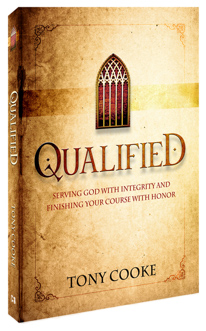 The following article is excerpted from the upcoming book, “Qualified: Serving God with Integrity and Finishing Your Course with Honor.” It will be released no later than July, but you can
  Spiritual leaders must be aware of and guard themselves against the intoxicating and devastating influence of pride, especially when experiencing success. Pride is insidious. It deceives the one infected, causing him to think "more" of himself, and "less" of God.
 One of the reasons that Lisa and I love sharing the Word of God around the world is because it is the truth of His Word that changes lives. When people come to the knowledge of His Word, they are acquiring the tools and skills necessary to experience transformation in their lives.
 Having grown up in a mainline denominational church, I was used to hearing about the Trinity. Every Sunday as church was being dismissed, we sang the Doxology, which ended with the admonition, "Praise Father, Son, and Holy Ghost." After decades of studying the Scripture, I am more impressed than ever before with the majestic and harmonious working of the members of the Trinity.
  We were greatly encouraged by the many expressions of love and support that we received following my father’s death (November 16, 2007). Each phone call, e-mail, card, flower arrangement, etc. meant so much to us, and each one seemed to release grace and strength to us.
 Albert Einstein said, “Thinking like we always have is what got us where we are. It is not going to get us where we are going.” One of the great quests of life is simply to get from point A to point B—from where we are now to where we need to be. Of course, action is a huge part of the journey, but thinking the right thoughts is also essential. Many never progress because they never change the way they think.
  The eyes of the world have been on Japan for the last few weeks as it experienced a 9.0 earthquake, a tsunami that brought unimaginable devastation, and a nuclear incident that has been described as at least a partial meltdown. As these events unfolded, millions around the world have witnessed the pain and suffering of the Japanese people. As I observed these happenings, I also thought of how the relationship between the U.S.A. and Japan has changed over the past several decades, and how two nations have gone from being bitter enemies to friends and allies.
 When a believer says, “I’m not under the law,” we usually assume that the person is really saying, “I’m not under the law of Moses.” This reflects an accurate understanding of Scripture. Even a casual study of Romans and Galatians will support this. For example, Paul was clearly speaking about the law of Moses when he wrote:
 Charles Spurgeon and his wife owned chickens, and people noted that they never gave any of the eggs away, but would only sell them. Some people felt they should have been more generous and accused them of being stingy and greedy. The Spurgeons were aware of these rumblings and criticisms, but never responded. It was only after Mrs. Spurgeon had passed away that the full story was revealed—the profits from the sale of the eggs were used by the Spurgeons to support two elderly widows.
 As I’ve traveled all over, it’s been interesting to see how people are handling the pressures and tensions in life. Just recently, an individual from the east coast told me, “People around here are on edge all the time.”
 One thing is certain about ministry; it is not one-dimensional. Ministry requires that we be able to adapt ourselves and our methods to different people and to different situations. Consider some of the following Scriptures that express this necessity:
 22 Through the LORD’s mercies we are not consumed, Because His compassions fail not.
 It’s amazing how we can focus on certain aspects of Scripture at one point in our lives, only to see richer, broader, deeper thoughts in surrounding and complementary passages as we mature through time, growth, and experience.
 As a young Bible school student, I heard Brother Hagin emphasize three major aspects of Jesus’ ministry that are mentioned in Matthew 9:35. “Then Jesus went about all the cities and villages, teaching in their synagogues, preaching the gospel of the kingdom, and healing every sickness and every disease among the people.” Brother Hagin would enumerate them, and we would often recite the concise summary with him: “Jesus went about teaching, preaching, and healing.”
 A paradox involves the presentation of two ideas which seem to be contradictory, but are in fact, complementary. A few classic examples in Scripture of paradoxical statements are:
 For the past several months, I have been reading the Old Testament slowly and systematically, and it has done my soul good. I have always majored on the New Testament, and I’m sure that this will always be the case; after all, that is OUR Covenant. But there has been something very rich and meaningful that I’ve been enjoying in mulling over God’s dealings with humanity prior to the coming of Jesus.
 There is a great lesson for us in understanding the formation of pearls. Natural pearls are formed when a grain of sand or another object slips in between one of the two shells of the oyster. Because of the irritating nature of the sand, the oyster encapsulates it in layers of “mother of pearl” secretion, and the pearl grows in size as the number of layers increases and the iridescent gem is formed.
 Perhaps you’ve heard about the little boy who was given an orange by a man. The boy’s mother asked, “What do you say to the nice man?” The little boy thought for a second, handed the orange back, and said, “Peel it.” There’s a little bit of gratitude lacking there, wouldn’t you say?
 Many years ago at a church service, I gave an altar call and a handful of people responded; one of these being a boy in his early teens. I had a self-congratulatory thought as though I was somehow responsible for these responses. Reality came quickly as a dear lady approached and let me know how thankful she was that God had touched her grandson’s heart. This grandmother told me that she had been praying for years for her grandson to come to the Lord. I realized that “I” wasn’t the cause of this young man coming to the Lord at all. I had been privileged to have a role in the overall process, but the gospel, the Power of the Holy Spirit, and this lady’s prayers were the major components of the process that led to this glorious event.
 I remember a decades-old television commercial from Memorex, a company that made cassette tapes. A glass was shown sitting on a table while the voice of Ella Fitzgerald was heard singing. When a certain high note was hit, the glass shattered and the viewer was asked, “Is it live, or is it Memorex?” The point is that the quality of their product was so high that taped recordings were essentially indistinguishable from the live voice.